
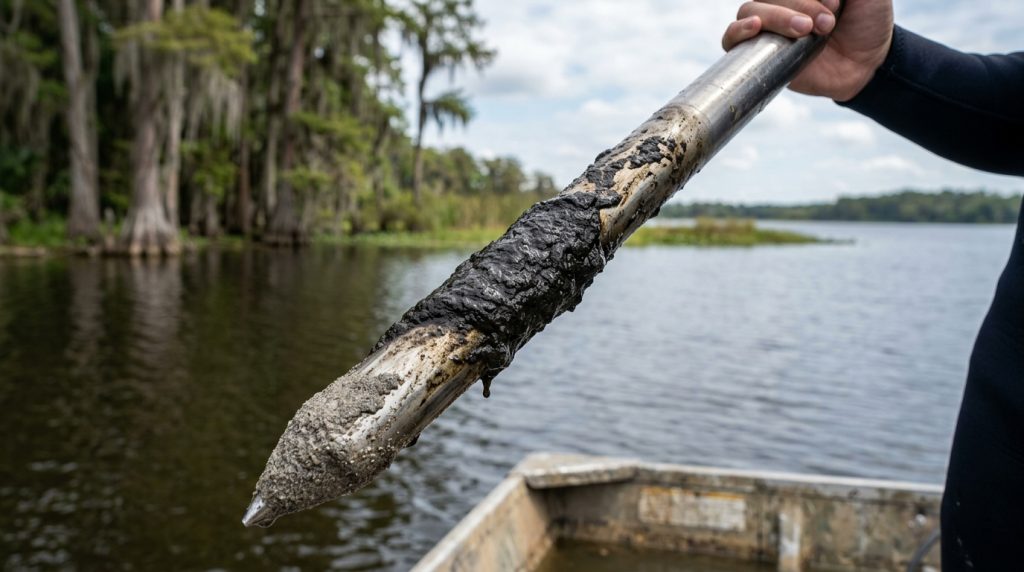
Pull a shovel of muck off a Sanford lake bottom and you learn something the water surface never shows you. Some shorelines clear up after one careful pass. Others fool you. The top layer comes off clean, the water looks better for a season, and then the soft black ooze creeps back like it never left. At Florida Land and Lake, we’ve worked enough properties around Lake Monroe and the smaller private ponds off Markham Woods Road to know that a single round of muck removal is sometimes just the opening move, not the finish. The reason has less to do with the work and more to do with what’s feeding the bottom in the first place.
Muck isn’t a single thing you scoop and haul away once. It’s a living, settling, compounding layer built from years of leaf drop, dead vegetation, fine silt, and organic runoff. When that buildup runs three or four feet deep near a dock, one pass gets you the loose material sitting on top. The compacted, older muck underneath needs time, settling, and sometimes a second visit before the bottom firms up the way a homeowner actually wants it.
What Actually Builds Up on a Sanford Lake Bottom
Central Florida gives muck plenty to work with. Warm water most of the year keeps organic material breaking down slowly, and the stuff that doesn’t fully decompose settles into that dark, sulfur smelling layer everyone recognizes when they step off the dock. Around Sanford specifically, the mix of cypress and oak canopy over many shorelines drops a steady load of leaves and needles into the water from fall through late winter.
Then there’s runoff. After a hard summer storm, sheet flow carries lawn clippings, fertilizer residue, and fine sediment straight into the lake. That sediment is heavy and it drops fast, layering on top of the organic muck already there. On lakes with heavy vegetation, dying plant matter adds to the pile every season. A bottom that took fifteen years to build up doesn’t reset in an afternoon.
Muck stacks in layers with different consistencies. The top eight to twelve inches is usually loose, soupy material that suspends the second you disturb it. Below that sits a denser, older layer that’s been compressing under its own weight for years. Deeper still, near firmer sand or clay, you’ll often hit a transition zone that’s part muck and part native bottom.
A first round of removal takes the loose top layer and often part of the middle. What it can’t always reach in one go is that deepest transition zone without pulling up more native material than you want to lose. That’s the honest reason some bottoms need a follow up. You take what comes clean, let the water settle and the remaining material stabilize, then come back and finish the deeper work with less disturbance and better visibility.
Reasons One Round Sometimes Isn’t Enough
Not every lake bottom needs a second pass. Plenty of jobs finish clean the first time. But certain conditions almost guarantee you’ll be back, and it helps to know them before the work starts so nobody’s surprised.
- Muck depth over three feet, where the bottom half is heavily compacted
- Shorelines shaded by cypress or oak that reload leaf litter every winter
- Properties at the low end of a drainage path that catch runoff sediment
- Lakes with dense aquatic vegetation that keeps dying back into the bottom
- Areas where a first pass stirred up so much fine material that visibility dropped to zero
- Bottoms with soft pockets that refill from surrounding muck migrating inward
That last point trips up a lot of homeowners. When you clear a section of bottom, the surrounding muck doesn’t stay put. Soft material has a way of sliding into the low spot you just created, especially on a sloped lake bottom. A second round after that migration settles gives you a firmer, more permanent result than trying to force everything in one aggressive pass.
How Vegetation Ties Into the Muck Problem
You can’t talk about muck around here without talking about plants. Hydrilla, water lettuce, and thick shoreline growth do two things to a lake bottom. They trap sediment in their root mass, and they add their own dead material to the muck layer every time they die back. Clear the muck but leave a heavy vegetation load and you’ve set the stage for the bottom to build right back up.
This is why we often pair bottom work with clearing the growth that feeds it. Getting the plant load under control with professional aquatic vegetation removal slows the return of muck and buys the restoration more staying power. Skip that step and a second muck round becomes almost inevitable, not because the first one failed, but because the source kept producing.
On a lot of Sanford properties, the vegetation and the muck are so tangled together that pulling one disturbs the other. Doing them in sequence, vegetation first, then muck, gives cleaner results and better water clarity while the work happens.
What a Phased Muck Removal Actually Looks Like
A phased approach isn’t a way to stretch out billing. It’s the practical answer to a bottom that won’t give up all its muck at once. The first phase pulls the accessible material and opens up the area. Then comes a settling window, usually a few weeks to a couple of months depending on the season and how much fine sediment got stirred up.
During that window, the disturbed water clears, suspended particles drop back down, and any muck that’s going to migrate into the cleared zone does so. When we come back for the second phase, we can see the bottom clearly and remove that settled material plus whatever crept in, without guessing. The result holds better because we’re finishing on a stable, visible bottom instead of fighting a cloud of our own making.
Our approach to expert muck removal and lake bottom restoration treats the settling period as part of the job, not an afterthought. Rushing a second pass before the water clears just repeats the first problem. Timing it right is half the work.
Late fall through early spring is usually the smart window for the heavier phase of muck work. Water levels tend to be lower and more predictable, the summer storm sediment has mostly settled, and vegetation growth slows down so you’re not fighting a fresh flush of plants. Starting a big removal right before hurricane season means the next round of runoff can undo some of your progress before the bottom stabilizes.
That said, we work year round and read each property on its own. A shaded shoreline that reloads leaves all winter might get its second phase timed for after the heaviest drop, once the canopy’s done shedding for the season.
Why the Shoreline Matters as Much as the Bottom
Clearing muck without addressing the shoreline is like bailing a boat without patching the hole. If the bank keeps eroding and washing soil into the water, you’re feeding the bottom fresh sediment the whole time. Stabilizing the edge protects the work you just paid for on the bottom.
Pairing bottom restoration with durable shoreline restoration solutions stops the erosion cycle that dumps new material into your cleared zone. A firm, planted or reinforced bank holds soil in place through Central Florida’s downpours, which means the muck you removed stays gone longer and the odds of needing a third pass drop way down.
We see this constantly on older lakefront properties where the original bank was never reinforced. The homeowner clears the bottom, feels great about it for a year, then watches the muck return because every storm sends another layer of bank soil into the water. Fix the edge and the bottom stays cleaner.
How to Tell If Your Bottom Will Need a Second Round
You won’t know for certain until the work starts, but there are signs you can read from your own dock before anyone shows up. Pay attention to these when you’re deciding what to expect.
- A pole pushed into the bottom sinks more than two to three feet before hitting firm ground
- The muck near your dock smells strongly of sulfur, a sign of deep organic buildup
- Your shoreline is shaded and drops heavy leaf litter every year
- Water clarity has gotten steadily worse over several seasons
- The bottom feels soft and bottomless well out from the bank, not just at the edge
- You’ve had muck removed before and it came back within a year or two
If most of those describe your property, plan for a phased job and budget for it up front. It’s far less frustrating to expect two rounds and finish in one than to expect one and get surprised by a bottom that won’t quit.
What This Means for Your Dock and Beachhead
Deep muck doesn’t just sit there. It pushes against dock pilings and softens the ground they’re set in, which is why some docks start leaning as the bottom degrades. Clearing the muck around a dock relieves that pressure and firms up the footing, but if the work’s done in phases you’ll want the dock structure checked between rounds so nothing shifts while the bottom’s still stabilizing.
The same goes for a beachhead. A sandy entry point only stays clean if the muck around it stays cleared. Restore the bottom, firm up the shoreline, and a beachhead has a real chance of lasting. Skip the bottom work and fresh muck creeps back under the sand within a season, turning a nice entry into a soft, murky spot nobody wants to wade into.
Getting a Real Assessment Before You Commit
The only honest way to know whether your lake bottom needs one round or two is to have someone probe it and read the layers. A quick walk of the shoreline, a few depth checks with a pole, and a look at what’s shading and draining into the water tells us most of what we need to plan the job right.
When you’re ready to find out what your bottom’s actually hiding, schedule an appointment with our team and we’ll give you a straight read on whether one pass will do it or whether a phased plan makes more sense for your property. No guessing, no upsell, just what the bottom’s telling us.
The properties that stay clear year after year are the ones where the whole system gets addressed, the vegetation feeding the muck, the shoreline washing soil in, and the bottom itself. Handle those together and a second round becomes maintenance instead of a do over. That’s the difference between a bottom you fight forever and one you actually get to enjoy.
Frequently Asked Questions
How do I know if one round of muck removal will be enough?
Push a pole into the bottom near your dock. If it sinks more than two to three feet before hitting firm ground, or if you’ve had muck return quickly in the past, plan for a phased job. Shaded, leaf heavy shorelines and properties at the low end of a drainage path also tend to need a second pass.
Why can’t you just remove all the muck in one aggressive pass?
The deepest muck layer blends into the native bottom, and pulling too hard means losing firm sand or clay you want to keep. A first pass also stirs up fine sediment that clouds the water. Letting it settle and returning gives a firmer, cleaner result than forcing everything at once.
How long should I wait between muck removal phases?
Usually a few weeks to a couple of months, depending on the season and how much sediment got suspended. The waiting window lets the water clear and any migrating muck settle into the cleared area so the second pass finishes on a stable, visible bottom.
Will removing aquatic vegetation reduce how often muck comes back?
Yes. Plants trap sediment in their roots and add dead material to the bottom every time they die back. Clearing the vegetation load slows the return of muck and gives the bottom restoration much longer staying power.
What’s the best time of year for muck work in Sanford?
Late fall through early spring is usually ideal. Water levels are lower and steadier, summer storm sediment has settled, and vegetation growth slows down. Starting heavy work right before hurricane season risks fresh runoff undoing your progress.
Does deep muck affect my dock?
It can. Deep muck softens the ground around pilings and can cause a dock to lean over time. Clearing the muck relieves that pressure and firms up the footing, which is why we recommend checking the dock structure between phases while the bottom stabilizes.