Uncategorized

Uncategorized

Why Some Sanford Lake Bottoms Need More Than One Round of Muck Removal

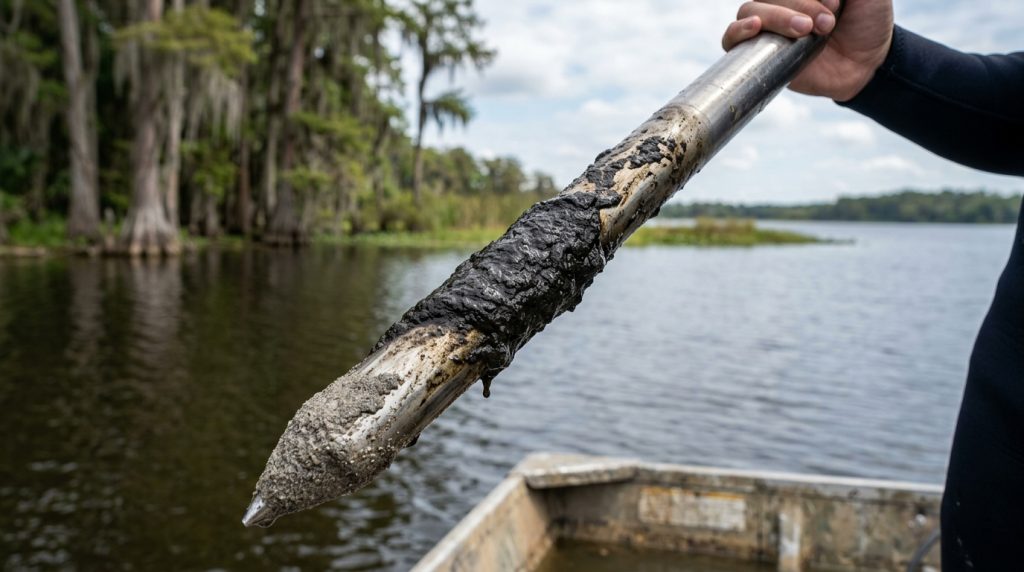
Pull a shovel of muck off a Sanford lake bottom and you learn something the water surface never shows you. Some shorelines clear up after one careful pass. Others fool you. The top layer comes off clean, the water looks better for a season, and then the soft black ooze creeps back like it never left. At Florida Land and Lake, we’ve worked enough properties around Lake Monroe and the smaller private ponds off Markham Woods Road to know that a single round of muck removal is sometimes just the opening move, not the finish. The reason has less to do with the work and more to do with what’s feeding the bottom in the first place. Muck isn’t a single thing you scoop and haul away once. It’s a living, settling, compounding layer built from years of leaf drop, dead vegetation, fine silt, and organic runoff. When that buildup runs three or four feet deep near a dock, one pass gets you the loose material sitting on top. The compacted, older muck underneath needs time, settling, and sometimes a second visit before the bottom firms up the way a homeowner actually wants it. What Actually Builds Up on a Sanford Lake Bottom Central Florida gives muck plenty to work with. Warm water most of the year keeps organic material breaking down slowly, and the stuff that doesn’t fully decompose settles into that dark, sulfur smelling layer everyone recognizes when they step off the dock. Around Sanford specifically, the mix of cypress and oak canopy over many shorelines drops a steady load of leaves and needles into the water from fall through late winter. Then there’s runoff. After a hard summer storm, sheet flow carries lawn clippings, fertilizer residue, and fine sediment straight into the lake. That sediment is heavy and it drops fast, layering on top of the organic muck already there. On lakes with heavy vegetation, dying plant matter adds to the pile every season. A bottom that took fifteen years to build up doesn’t reset in an afternoon. Muck stacks in layers with different consistencies. The top eight to twelve inches is usually loose, soupy material that suspends the second you disturb it. Below that sits a denser, older layer that’s been compressing under its own weight for years. Deeper still, near firmer sand or clay, you’ll often hit a transition zone that’s part muck and part native bottom. A first round of removal takes the loose top layer and often part of the middle. What it can’t always reach in one go is that deepest transition zone without pulling up more native material than you want to lose. That’s the honest reason some bottoms need a follow up. You take what comes clean, let the water settle and the remaining material stabilize, then come back and finish the deeper work with less disturbance and better visibility. Reasons One Round Sometimes Isn’t Enough Not every lake bottom needs a second pass. Plenty of jobs finish clean the first time. But certain conditions almost guarantee you’ll be back, and it helps to know them before the work starts so nobody’s surprised. Muck depth over three feet, where the bottom half is heavily compacted Shorelines shaded by cypress or oak that reload leaf litter every winter Properties at the low end of a drainage path that catch runoff sediment Lakes with dense aquatic vegetation that keeps dying back into the bottom Areas where a first pass stirred up so much fine material that visibility dropped to zero Bottoms with soft pockets that refill from surrounding muck migrating inward That last point trips up a lot of homeowners. When you clear a section of bottom, the surrounding muck doesn’t stay put. Soft material has a way of sliding into the low spot you just created, especially on a sloped lake bottom. A second round after that migration settles gives you a firmer, more permanent result than trying to force everything in one aggressive pass. How Vegetation Ties Into the Muck Problem You can’t talk about muck around here without talking about plants. Hydrilla, water lettuce, and thick shoreline growth do two things to a lake bottom. They trap sediment in their root mass, and they add their own dead material to the muck layer every time they die back. Clear the muck but leave a heavy vegetation load and you’ve set the stage for the bottom to build right back up. This is why we often pair bottom work with clearing the growth that feeds it. Getting the plant load under control with professional aquatic vegetation removal slows the return of muck and buys the restoration more staying power. Skip that step and a second muck round becomes almost inevitable, not because the first one failed, but because the source kept producing. On a lot of Sanford properties, the vegetation and the muck are so tangled together that pulling one disturbs the other. Doing them in sequence, vegetation first, then muck, gives cleaner results and better water clarity while the work happens. What a Phased Muck Removal Actually Looks Like A phased approach isn’t a way to stretch out billing. It’s the practical answer to a bottom that won’t give up all its muck at once. The first phase pulls the accessible material and opens up the area. Then comes a settling window, usually a few weeks to a couple of months depending on the season and how much fine sediment got stirred up. During that window, the disturbed water clears, suspended particles drop back down, and any muck that’s going to migrate into the cleared zone does so. When we come back for the second phase, we can see the bottom clearly and remove that settled material plus whatever crept in, without guessing. The result holds better because we’re finishing on a stable, visible bottom instead of fighting a cloud of our own making. Our approach to expert muck removal and lake bottom restoration treats the settling period
Uncategorized

Mechanical Cutting Versus Herbicide Treatment for Sanford Lake Weeds

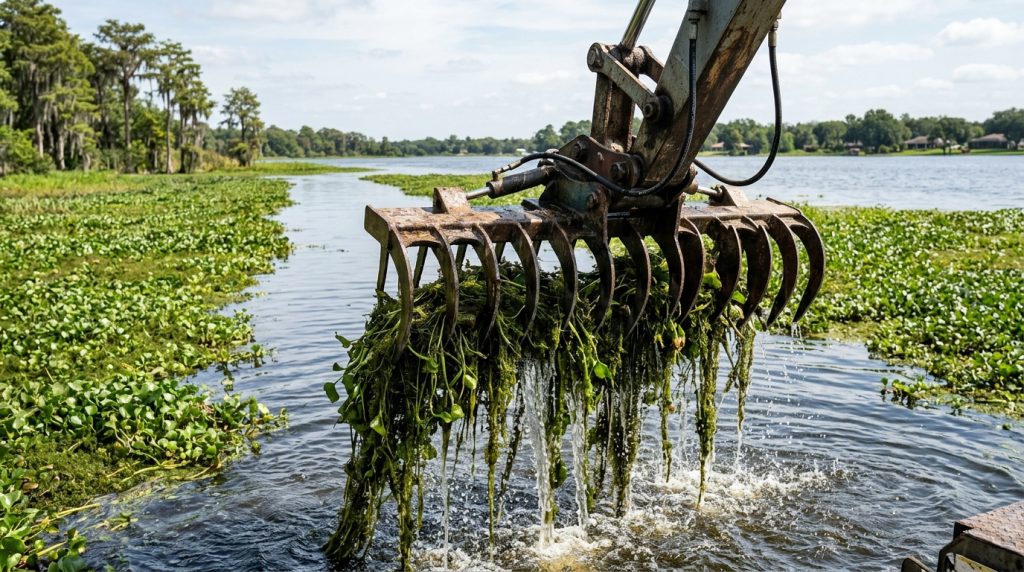
Every summer we get the same call from folks along the St. Johns and the smaller lakes around Seminole County. The weeds have taken the swim area again, the boat won’t clear the slip without dragging green ropes off the prop, and the dock smells like something died underneath it. At Florida Land and Lake, we’ve pulled hydrilla, cut back cattails, and cleared water hyacinth off enough Sanford shorelines to know that the first decision you make matters most: do you cut the weeds out mechanically, or do you treat them with herbicide? Both work. They work differently, they cost differently, and they leave your lake in very different shape a month later. This post walks through both approaches plainly, so you can tell which one fits your water, your budget, and how fast you want the shoreline back. What mechanical cutting actually does Mechanical cutting means physically removing the plant. We cut it, rake it, and haul it out of the water so it’s gone that same day. No waiting, no die off period, no decomposing mat sinking to the bottom. You look out the window and the swim lane is clear. For thick submerged growth like hydrilla, or floating mats of water hyacinth and water lettuce, cutting gives you an immediate result. That’s the biggest reason people around Lake Monroe and Lake Jesup pick it. A family with kids who want the water back by the weekend doesn’t want to wait ten days for chemicals to work through a plant. The trade off is that cutting alone doesn’t always kill the root system. Some plants regrow from fragments left behind, which is why the removal has to be thorough and why the cut material has to leave the property instead of drifting back onto your shore. Done right, cutting also pulls out the organic load that would otherwise rot and feed the next bloom. Our aquatic vegetation removal services are built around getting the plant material off site cleanly, so you’re not trading a weed problem for a smell problem a week later. What herbicide treatment actually does Herbicide kills the plant in place and lets it break down in the water. There’s no hauling on the day of treatment. A licensed applicator sprays or injects the product, the plant browns out over a week or two, and it slowly sinks and decomposes. The appeal is reach. Chemical treatment can hit a large, spread out infestation faster than a crew with cutting equipment can physically clear it. For certain species that regrow aggressively from fragments, a targeted treatment can knock back the whole stand at once, including growth that a cutter would struggle to reach in deeper pockets. There are catches worth understanding before you go this route. Killed vegetation doesn’t disappear, it sinks. On a lake that’s already dealing with a soft, mucky bottom, dumping a fresh load of dead plant matter can make that layer worse over time. There’s also a die off window where the water can look and smell rough while everything decomposes. And oxygen levels can dip as plants break down, which is hard on fish if a big area is treated at once during our hot Sanford summers. How the two compare on the things you actually care about Most people aren’t choosing based on the chemistry. They’re choosing based on how fast, how clean, how much, and what happens to their lake bottom afterward. Here’s the honest breakdown. Speed of visible result: cutting clears the area the same day, herbicide takes one to three weeks to brown out. What happens to the plant: cutting hauls it away, herbicide leaves it to sink and decompose in the water. Effect on lake bottom: cutting reduces the organic load, herbicide can add to muck buildup over repeated treatments. Coverage of large areas: herbicide can reach spread out growth faster, cutting is precise but slower over big acreage. Impact during hot weather: herbicide die off can lower oxygen in summer, cutting does not. Frequency: both may need repeating, since Florida growth is relentless from spring through fall. Neither one is a permanent fix on its own. Our growing season here runs long, and warm water plus nutrient runoff after summer storms means weeds come back. The question is which method gets you the result you want with the fewest downsides for your particular shoreline. Why the lake bottom decides more than people think The single biggest reason we lean toward mechanical removal on a lot of Sanford properties is what’s already sitting on the bottom. Many of these lakes have years of accumulated muck, and every stand of weeds you kill in place adds to it. Once that soft layer gets deep enough, it becomes its own problem: it swallows your feet at the swim area, it feeds algae, and it keeps the weeds coming back no matter how many times you treat the surface. If your bottom is already soft and dark and you can sink to your knees walking out, herbicide alone tends to make the underlying issue worse while it fixes the visible one. That’s where our muck removal and lake bottom restoration work comes in, because clearing the weeds and then dealing with the sludge underneath is what actually gives you a firm, usable bottom instead of a temporary clearing that fills back in. When cutting is the better call Cutting wins in a few clear situations. If you’ve got a defined swim area or a boat lane you need clear right now, physical removal gets you there without a waiting period. If your lake bottom is already muck heavy, cutting avoids piling more dead material onto it. And if you’ve got kids, dogs, or livestock using the water regularly, hauling the plant out sidesteps the die off window entirely. We also favor cutting near docks and beachheads where you want a clean, defined edge. It gives you control over exactly what stays and what goes, instead of browning out

Find Florida Land & Lake

260 Tower Court, Sanford, FL